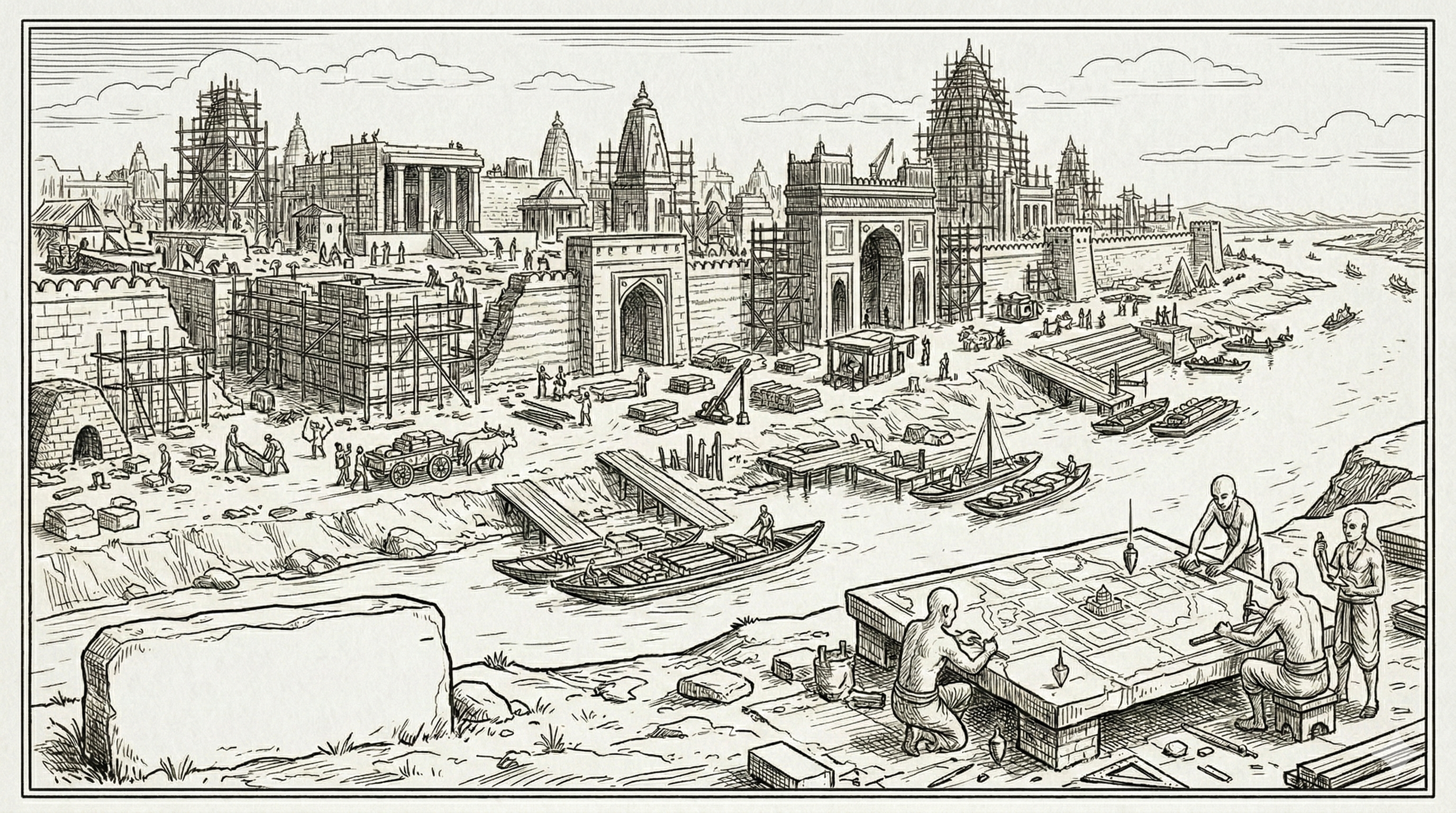
What interested me about Amaravati wasn’t its peak — it was its construction. There’s a moment in the life of any great city when it is being built, when the scaffolding is still up and the architects are still arguing and the stone is arriving by river. That moment is almost never written about. History records the finished thing.
The Amaravati of the novel is caught in that moment — a city that knows what it intends to become but hasn’t become it yet. That tension between ambition and actuality is one of the animating pressures of Book 1.
The illustration captures it: the waterfront still rough-edged, the temples half-raised, scholars already at work at the riverside even as the walls go up around them.