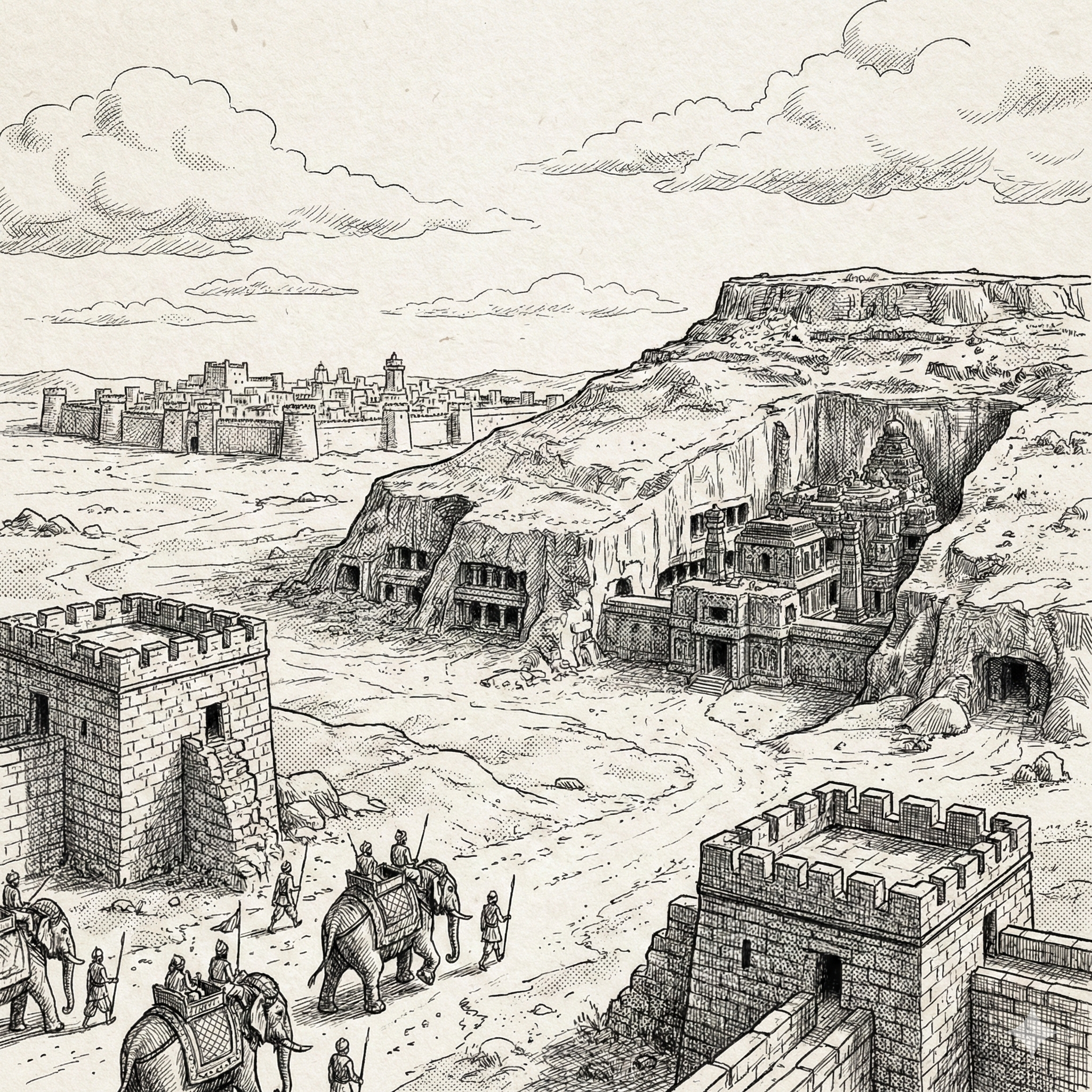
Chapter 3 is set on the Deccan Plateau, and I struggled with it more than any other section of the book. The Deccan resists romanticism. It is not the lush south, not the fertile Gangetic plain. It is hard, black basalt, cracked red earth, a landscape that has been fought over so many times it has absorbed the violence and gone silent about it.
Here is how Vidyut experiences it as he travels north:
The air grew heavy with a localized magnetic tension that made the copper mesh in his cloak hum with a constant, low vibration, a sound he felt in his teeth. To his trained senses, the landscape was never silent. Every outcropping of granite hummed with a specific geological frequency. He could see faint violet auroras clinging to the tips of distant gopurams, excess static bleeding off into the atmosphere like steam from a kettle.
The auroras were the detail I was most uncertain about — too strange, I thought. But the Deccan’s geology is genuinely unusual. The Deccan Traps, the great flood basalt that covers most of the plateau, formed from one of the largest volcanic events in Earth’s history. The rock remembers it. In a novel about resonance and frequency, a landscape that hums seemed not only acceptable but necessary.